
CALM HORSE
COOL ENERGY FOR LIGHT TO MODERATE WORK
A grain-free, low-starch horse feed formulated to provide cool, slow-release energy while supporting digestive health through GastroPak.
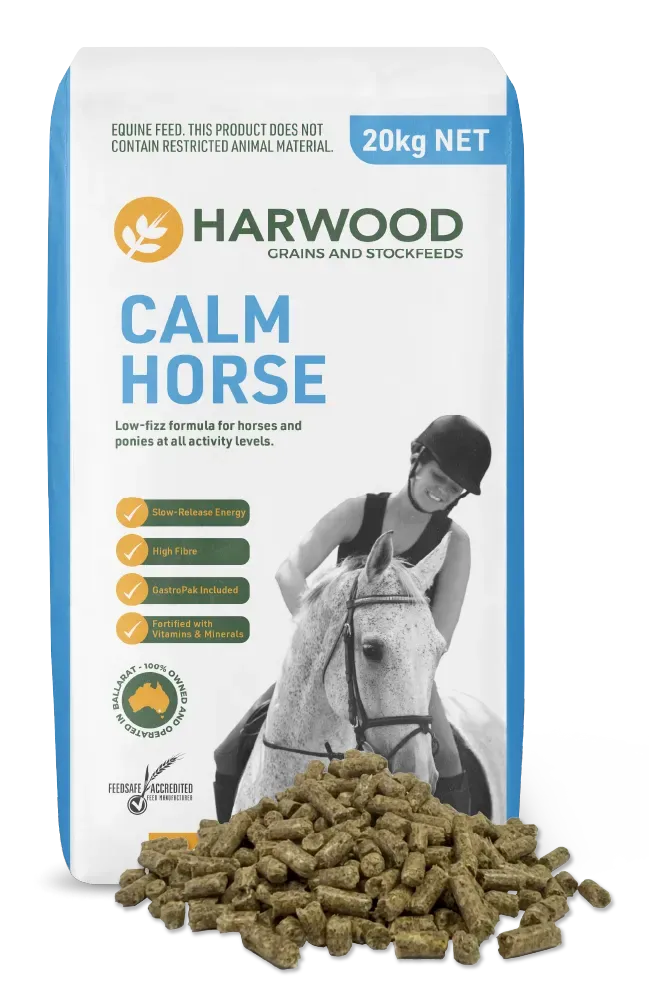
Calm Horse is:
- Ideal for horses and ponies in light to moderate work and those in need of a cool energy source.
- Loaded with super fibres.
- Less than 10% starch, and under 15% NSC.
- Contains our scientifically formulated GastroPak to support digestive health.
Have questions?
Want to balance your horse's diet?
Gastropak
Grain Free
Super Fibres
Vitamins & Minerals
Low-Fizz Formula
Why choose Calm Horse?
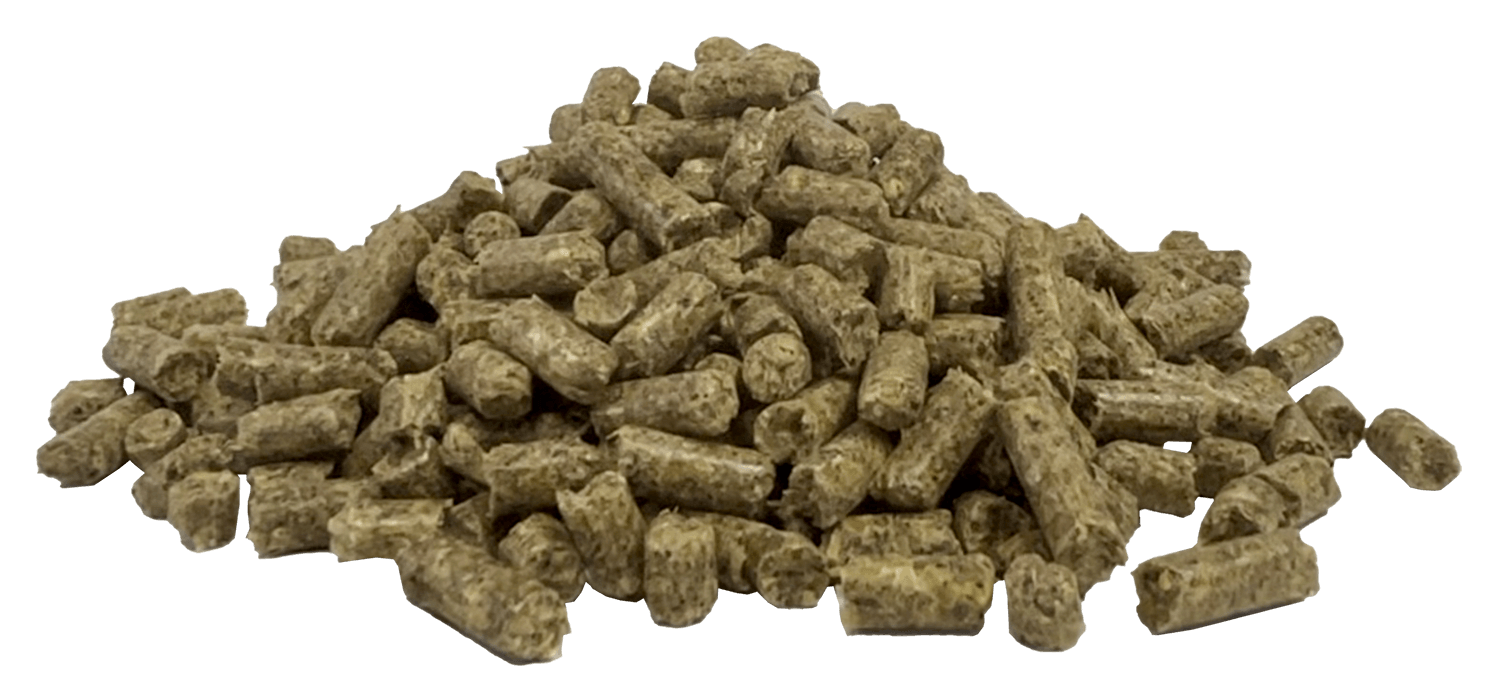
Digestive support
Every pellet contains GastroPak, a blend of ingredients selected to support gastric and hindgut health.
Low starch nutrition
Calm Horse contains less than 10% starch, helping reduce reliance on rapidly fermentable cereal grains and promoting digestive health.
Super-fibre energy
Energy is supplied primarily from highly digestible fibre sources that are slowly broken down by beneficial microbes in the hindgut.
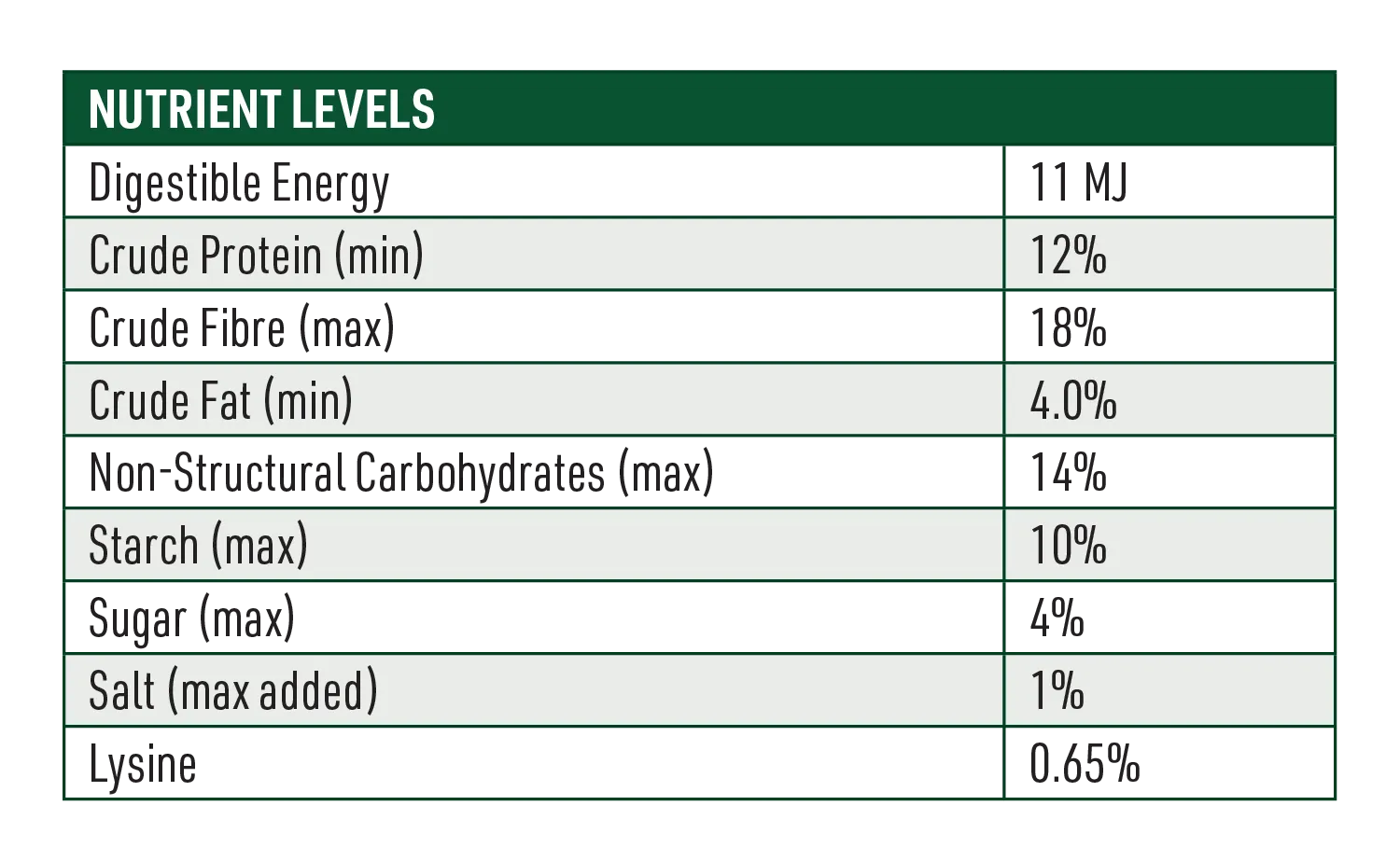
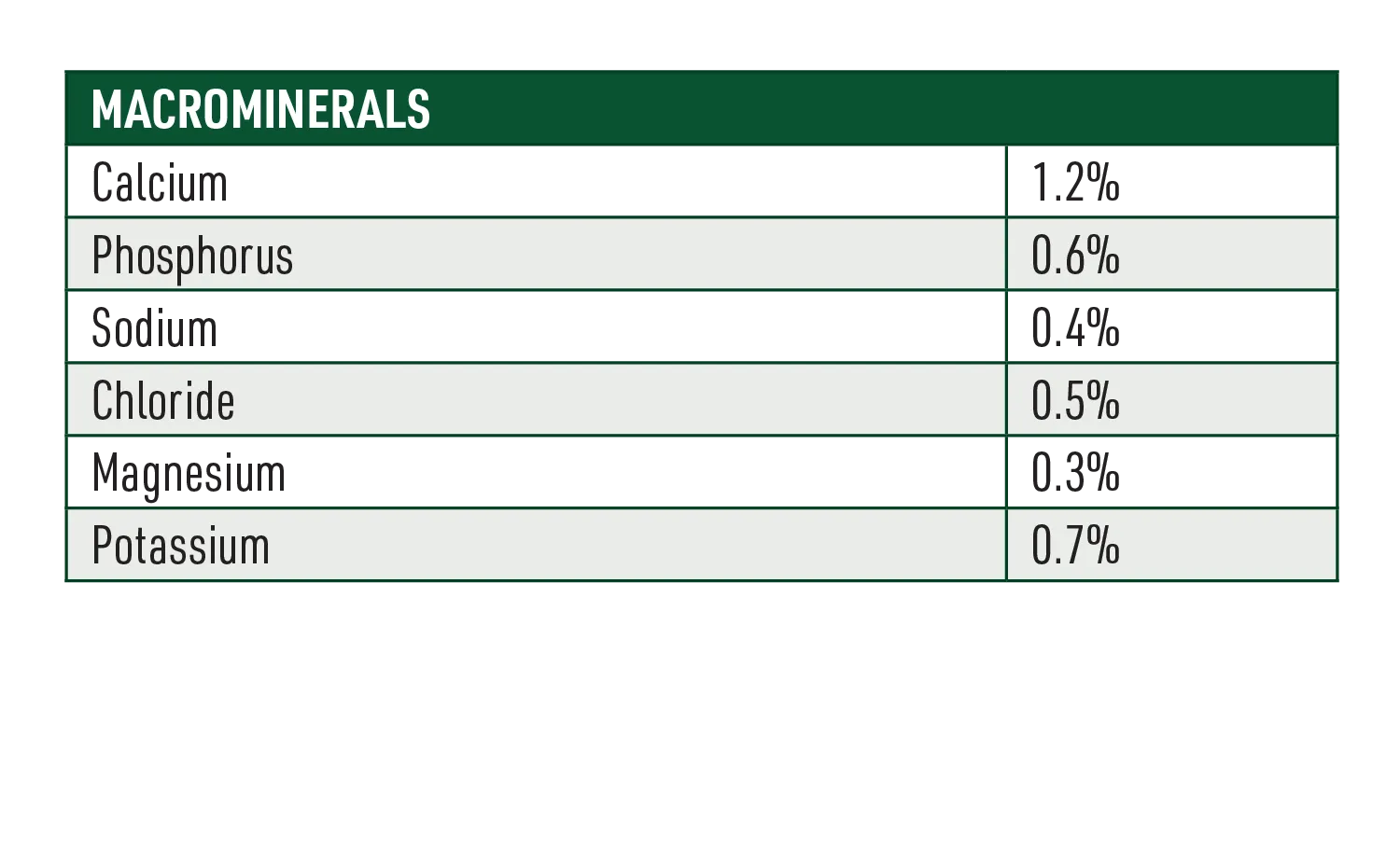
Typical Nutritional Analysis (per kg fed)
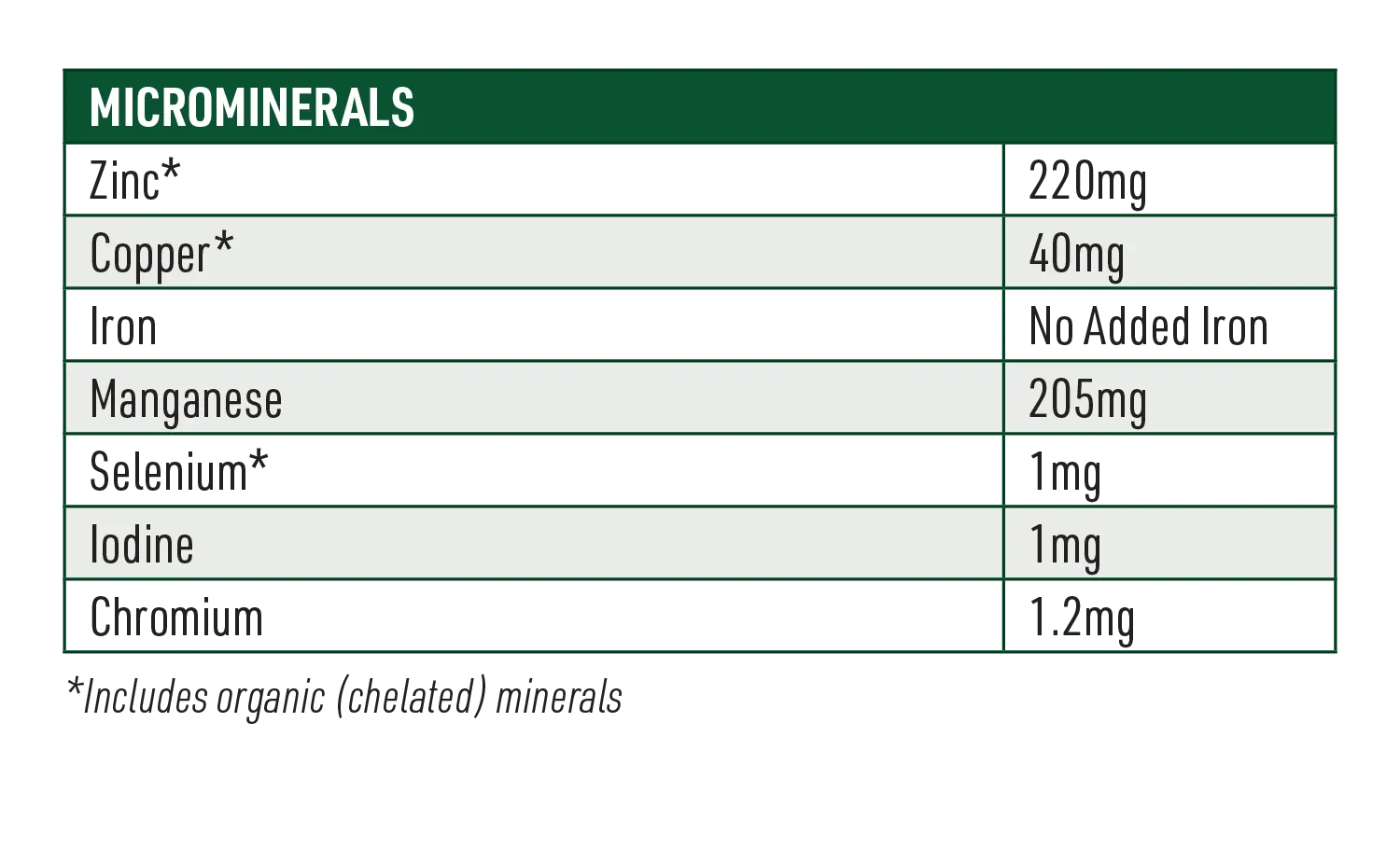
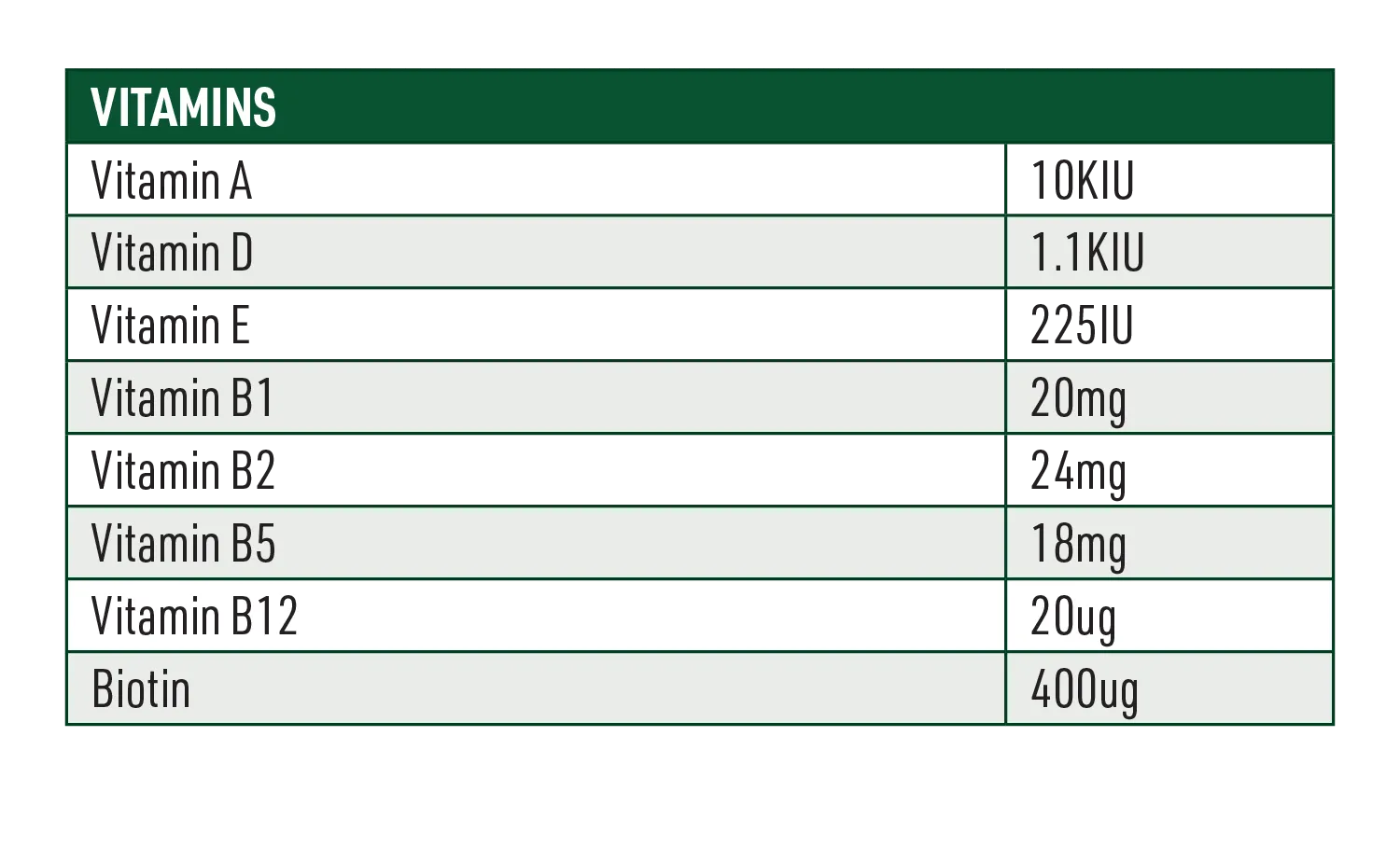
Feeding Directions (kg per day)

Our suggested feeding rates are a
guide only. Please consult us for individual feeding recommendations.
- Your horse should receive a minimum of 1% of their body weight in quality forage such as hay, pasture and/or chaff.
- Make changes in your horse’s diet gradually over at least a two week period.
- Be sure to always have fresh and clean water available to your horse.
Formulated from a selection of the following ingredients: Lupins, Vegetable Protein Meals, Lucerne, Oat Hulls, Legume Hulls, Canola Oil, GastroPak (Gastric Buffer, Diamond V XPC), Comprehensive Vitamin and Mineral Premix, Lysine, Methionine, Calcium Carbonate, Salt, Magnesium Oxide, Monodicalcium Phosphate, Vitamin E, and Biotin
The science behind Calm Horse
1. Low starch nutrition
While most healthy horses can digest carbohydrates effectively (to a certain extent), many horses benefit from diets lower in starch and sugar. Horses prone to laminitis, Equine Metabolic Syndrome (EMS), insulin dysregulation, or certain muscle disorders require careful management of dietary starch and non-structural carbohydrates (NSC) (see Fibre Assist).
Beyond metabolic considerations, research has shown that high-starch diets may influence behaviour and digestive health. Compared with high-fibre diets and high-fat/high-fibre diets, high-starch feeding has been associated with increased excitability and stereotypic behaviours in some horses (Bulmer et al., 2015; Bulmer et al., 2019; Nicol et al., 2005).
This may be partly due to the fact that horses have a limited capacity to digest large amounts of starch in the small intestine. Horses produce relatively low levels of pancreatic α-amylase, the enzyme responsible for starch digestion (Lorenzo-Figueras et al., 2007; Goer et al., 2013). When starch intake exceeds this digestive capacity, undigested starch can enter the hindgut where it is rapidly fermented, potentially contributing to changes in microbial populations, hindgut acidosis, and digestive disturbances (Destrez et al., 2019).
2. Super Fibre Energy
Unlike traditional grain-based feeds that rely heavily on cereal starch, Calm Horse provides a significant proportion of its energy from highly digestible fibre sources, including lupin hulls.
Super fibres such as lupin hulls, soybean hulls and beet pulp are highly fermentable fibre ingredients that provide more energy than typical forage sources. While the digestibility of fibre in hay can vary widely (approximately 40–60%, depending on plant maturity and quality), super fibres can have fibre digestibility of around 70–80%, making them an efficient source of slow-release energy.
The horse’s hindgut contains a complex community of microorganisms that ferment fibre into volatile fatty acids (VFAs), including acetate, propionate and butyrate. These VFAs are absorbed and used as an important energy source, contributing up to 70% of a horse’s maintenance energy requirements.
By shifting energy supply away from rapidly digested cereal starch and towards highly digestible fibre, Calm Horse supports a more natural digestive process while helping maintain a healthier hindgut environment. Excess starch intake can overwhelm starch digestion in the small intestine, allowing starch to reach the hindgut where it may disrupt the microbial population and increase the risk of digestive disturbances (Bulmer et al. 2019).
3. Digestive support
The equine gastrointestinal tract is a complex ecosystem where the stomach, small intestine and hindgut work together to support digestion, nutrient absorption and overall health. Factors such as diet composition, feeding frequency, exercise and stress can influence this delicate balance.
Gastric ulcers and hindgut acidosis are two increasingly common issues both performance horses and leisure horses face, with up to 86% of performance horses having gastric ulcers (Begg & O’Sullivan 2008; Rabuffo et al 2002).
It is well-recognised that digestive issues such as gastric ulcers and hindgut acidosis are linked to behavioural issues such as an elevated stress response and reactivity (Deztrez et al 2015; Malmkvist et al 2012). Therefore, promoting digestive health can have the beneficial effects horses with behavioural issues may require.
Calm Horse contains GastroPak, a blend of two complementary ingredients targeted to support overall digestive health:
1. Marine Calcium Gastric Buffer
The horse’s stomach continuously produces acid to help with digestion of feedstuffs. However, prolonged exposure to a highly acidic environment, and weakening of the lining protecting the delicate cells of the stomach can contribute to gastric ulcers, particularly in horses exposed to stress, restricted feeding periods or intensive exercise.
GastroPak contains a sustainably sourced marine calcium buffer derived from red seaweed (Lithothamnion calcareum) from the waters of Iceland and Ireland. Its porous honeycomb structure and high calcium content helps to buffer the stomach environment. Research looking at these seaweed-derived calcium supplements has shown their effectiveness in buffering the stomach environment in horses and increase gastric pH following consumption (Jacobs et al 2020; Moore-Colyer et al. 2014). It has also been shown to significantly improve outcomes in horses with gastric ulcers in trials (Moir et al. 2016).
Figure 1. Gastric pH at 2hr after feeding pellet containing 22.7g/100kg bodyweight of added marine calcium gastric buffer (Jacobs et al. 2020). Differing superscripts represent statistical significance (p<0.05). This figure shows that pH significantly increases (the stomach becomes less acidic) 2 hours after feeding a marine calcium supplement compared to a pellet not containing the treatment (the control).
2. Diamond V® XPC Postbiotics: Supporting the Hindgut Microbiome
The equine hindgut contains a complex microbial population responsible for fermenting fibre and producing volatile fatty acids (VFAs), which provide an important energy source for the horse.
Diamond V® XPC is a yeast fermentation product (aka postbiotic) that provides beneficial microbial metabolites and fermentation components to support digestive function. Research in equine models has shown that yeast fermentation products can influence hindgut fermentation patterns, including increasing production of beneficial VFAs (Binnebose et al 2023).
By supporting microbial activity and maintaining a favourable hindgut environment, postbiotics may help support efficient fibre digestion and digestive resilience during periods of dietary or environmental stress. Recent equine research has also investigated the role of postbiotics in supporting hindgut pH stability (Sheridan et al 2026) and microbial balance.
Why combine gastric buffering and postbiotics?
Digestive health is not isolated to one part of the gastrointestinal tract. The stomach and hindgut work together as a connected system:
Marine calcium buffer
→ Supports a balanced gastric environment to help reduce the risk of ulcers
Diamond V® XPC postbiotics
→ Supports hindgut microbial activity and fermentation of fibre
Together
→ Helps support digestive health, nutrient utilisation and consistent energy availability
GastroPak provides Calm Horse with comprehensive digestive support, helping horses receive the benefits of a high-fibre, low-starch diet while supporting the complex digestive ecosystem essential for equine health.
References
Bulmer, Louise S., et al. "High-starch diets alter equine faecal microbiota and increase behavioural reactivity." Scientific reports 9.1 (2019): 18621.
Bulmer, Louise, et al. "The effects of a high-starch or high-fibre diet on equine reactivity and handling behaviour." Applied Animal Behaviour Science 165 (2015): 95-102.
Destrez, Alexandra, et al. "Changes of the hindgut microbiota due to high-starch diet can be associated with behavioral stress response in horses." Physiology & behavior 149 (2015): 159-164.
Malmkvist, Jens, et al. "Behaviour and stress responses in horses with gastric ulceration." Applied animal behaviour science 142.3-4 (2012): 160-167.
Nicol, C. J., et al. "The effects of diet and weaning method on the behaviour of young horses." Applied Animal Behaviour Science 95.3-4 (2005): 205-221.
Lorenzo-Figueras, Mireia, et al. "Digestive enzyme concentrations and activities in healthy pancreatic tissue of horses." American journal of veterinary research 68.10 (2007): 1070-1072.
Geor, Raymond J., Patricia Harris, and Manfred Coenen. Equine applied and clinical nutrition: health, welfare and performance. Elsevier Health Sciences, 2013.
Destrez, Alexandra, et al. "Changes of the hindgut microbiota due to high-starch diet can be associated with behavioral stress response in horses." Physiology & behavior 149 (2015): 159-164.
Begg, L. M., and C. B. O'sullivan. "The prevalence and distribution of gastric ulceration in 345 racehorses." Australian veterinary journal 81.4 (2003): 199-201.
Rabuffo, Tara S., et al. "Associations between age or sex and prevalence of gastric ulceration in Standardbred racehorses in training." Journal of the American Veterinary Medical Association 221.8 (2002): 1156-1159.
Jacobs, Robert D., et al. "The effect of a seaweed-derived calcium supplement on gastric juice pH in the horse." Journal of equine veterinary science 95 (2020): 103265.
Moore-Colyer, Meriel, Denise M. O'Gorman, and Katherine Wakefield. "An in vitro investigation into the effects of a marine-derived, multimineral supplement in simulated equine stomach and hindgut environments." Journal of Equine Veterinary Science 34.3 (2014): 391-397.
Moir, T., et al. "The influence of feeding a high calcium, algae supplement on gastric ulceration in adult horses." Journal of Applied Animal Nutrition 4 (2016): e8.
Binnebose, Andrea M., et al. "PSI-19 A Saccharomyces Cerevisiae-Derived Postbiotic Stimulates in Vitro Volatile Fatty Acid Production and Influences Hindgut Microbial Population Characteristics." Journal of Animal Science 101.Supplement_2 (2023): 277-278.
Sheridan, L., et al. "An in vitro investigation into the effects of postbiotic supplementation on stabilising equine hindgut pH." Journal of Equine Veterinary Science (2025): 105746.
Ganda, Erika, et al. "Saccharomyces cerevisiae fermentation product improves robustness of equine gut microbiome upon stress." Frontiers in Veterinary Science 10 (2023): 1134092.
Raspa, Federica, et al. "Microbiota characterization throughout the digestive tract of horses fed a high-fiber vs. a high-starch diet." Frontiers in Veterinary Science 11 (2024): 1386135.
Dionne, Rachel M., et al. "Gastric ulcers in standardbred racehorses: prevalence, lesion description, and risk factors." Journal of Veterinary Internal Medicine 17.2 (2003): 218-222.
The science behind Calm Horse
1. Low Starch Nutrition
While most healthy horses can digest carbohydrates effectively (to a certain extent), many horses benefit from diets lower in starch and sugar. Horses prone to laminitis, Equine Metabolic Syndrome (EMS), insulin dysregulation, or certain muscle disorders require careful management of dietary starch and non-structural carbohydrates (NSC) (see Fibre Assist).
Beyond metabolic considerations, research has shown that high-starch diets may influence behaviour and digestive health. Compared with high-fibre diets and high-fat/high-fibre diets, high-starch feeding has been associated with increased excitability and stereotypic behaviours in some horses (Bulmer et al., 2015; Bulmer et al., 2019; Nicol et al., 2005).
This may be partly due to the fact that horses have a limited capacity to digest large amounts of starch in the small intestine. Horses produce relatively low levels of pancreatic α-amylase, the enzyme responsible for starch digestion (Lorenzo-Figueras et al., 2007; Goer et al., 2013). When starch intake exceeds this digestive capacity, undigested starch can enter the hindgut where it is rapidly fermented, potentially contributing to changes in microbial populations, hindgut acidosis, and digestive disturbances (Destrez et al., 2019).
2. Super Fibre Energy
Unlike traditional grain-based feeds that rely heavily on cereal starch, Calm Horse provides a significant proportion of its energy from highly digestible fibre sources, including lupin hulls.
Super fibres such as lupin hulls, soybean hulls and beet pulp are highly fermentable fibre ingredients that provide more energy than typical forage sources. While the digestibility of fibre in hay can vary widely (approximately 40–60%, depending on plant maturity and quality), super fibres can have fibre digestibility of around 70–80%, making them an efficient source of slow-release energy.
The horse’s hindgut contains a complex community of microorganisms that ferment fibre into volatile fatty acids (VFAs), including acetate, propionate and butyrate. These VFAs are absorbed and used as an important energy source, contributing up to 70% of a horse’s maintenance energy requirements.
By shifting energy supply away from rapidly digested cereal starch and towards highly digestible fibre, Calm Horse supports a more natural digestive process while helping maintain a healthier hindgut environment. Excess starch intake can overwhelm starch digestion in the small intestine, allowing starch to reach the hindgut where it may disrupt the microbial population and increase the risk of digestive disturbances (Bulmer et al. 2019).
3. Digestive Support
The equine gastrointestinal tract is a complex ecosystem where the stomach, small intestine and hindgut work together to support digestion, nutrient absorption and overall health. Factors such as diet composition, feeding frequency, exercise and stress can influence this delicate balance.
Gastric ulcers and hindgut acidosis are two increasingly common issues both performance horses and leisure horses face, with up to 86% of performance horses having gastric ulcers (Begg & O’Sullivan 2008; Rabuffo et al 2002).
It is well-recognised that digestive issues such as gastric ulcers and hindgut acidosis are linked to behavioural issues such as an elevated stress response and reactivity (Deztrez et al 2015; Malmkvist et al 2012). Therefore, promoting digestive health can have the beneficial effects horses with behavioural issues may require.
Calm Horse contains GastroPak, a blend of two complementary ingredients targeted to support overall digestive health:
Marine Calcium Gastric Buffer
The horse’s stomach continuously produces acid to help with digestion of feedstuffs. However, prolonged exposure to a highly acidic environment, and weakening of the lining protecting the delicate cells of the stomach can contribute to gastric ulcers, particularly in horses exposed to stress, restricted feeding periods or intensive exercise.
GastroPak contains a sustainably sourced marine calcium buffer derived from red seaweed (Lithothamnion calcareum) from the waters of Iceland and Ireland. Its porous honeycomb structure and high calcium content helps to buffer the stomach environment. Research looking at these seaweed-derived calcium supplements has shown their effectiveness in buffering the stomach environment in horses and increase gastric pH following consumption (Jacobs et al 2020; Moore-Colyer et al. 2014). See this chart for more. It has also been shown to significantly improve outcomes in horses with gastric ulcers in trials (Moir et al. 2016).
Diamond V® XPC Postbiotics: Supporting the Hindgut Microbiome
The equine hindgut contains a complex microbial population responsible for fermenting fibre and producing volatile fatty acids (VFAs), which provide an important energy source for the horse.
Diamond V® XPC is a yeast fermentation product (aka postbiotic) that provides beneficial microbial metabolites and fermentation components to support digestive function. Research in equine models has shown that yeast fermentation products can influence hindgut fermentation patterns, including increasing production of beneficial VFAs (Binnebose et al 2023).
By supporting microbial activity and maintaining a favourable hindgut environment, postbiotics may help support efficient fibre digestion and digestive resilience during periods of dietary or environmental stress. Recent equine research has also investigated the role of postbiotics in supporting hindgut pH stability (Sheridan et al 2026) and microbial balance.
Why combine gastric buffering and postbiotics?
Digestive health is not isolated to one part of the gastrointestinal tract. The stomach and hindgut work together as a connected system:
Marine calcium buffer → Supports a balanced gastric environment to help reduce the risk of ulcers
Diamond V® XPC postbiotics → Supports hindgut microbial activity and fermentation of fibre
Together → Helps support digestive health, nutrient utilisation and consistent energy availability
GastroPak provides Calm Horse with comprehensive digestive support, helping horses receive the benefits of a high-fibre, low-starch diet while supporting the complex digestive ecosystem essential for equine health.
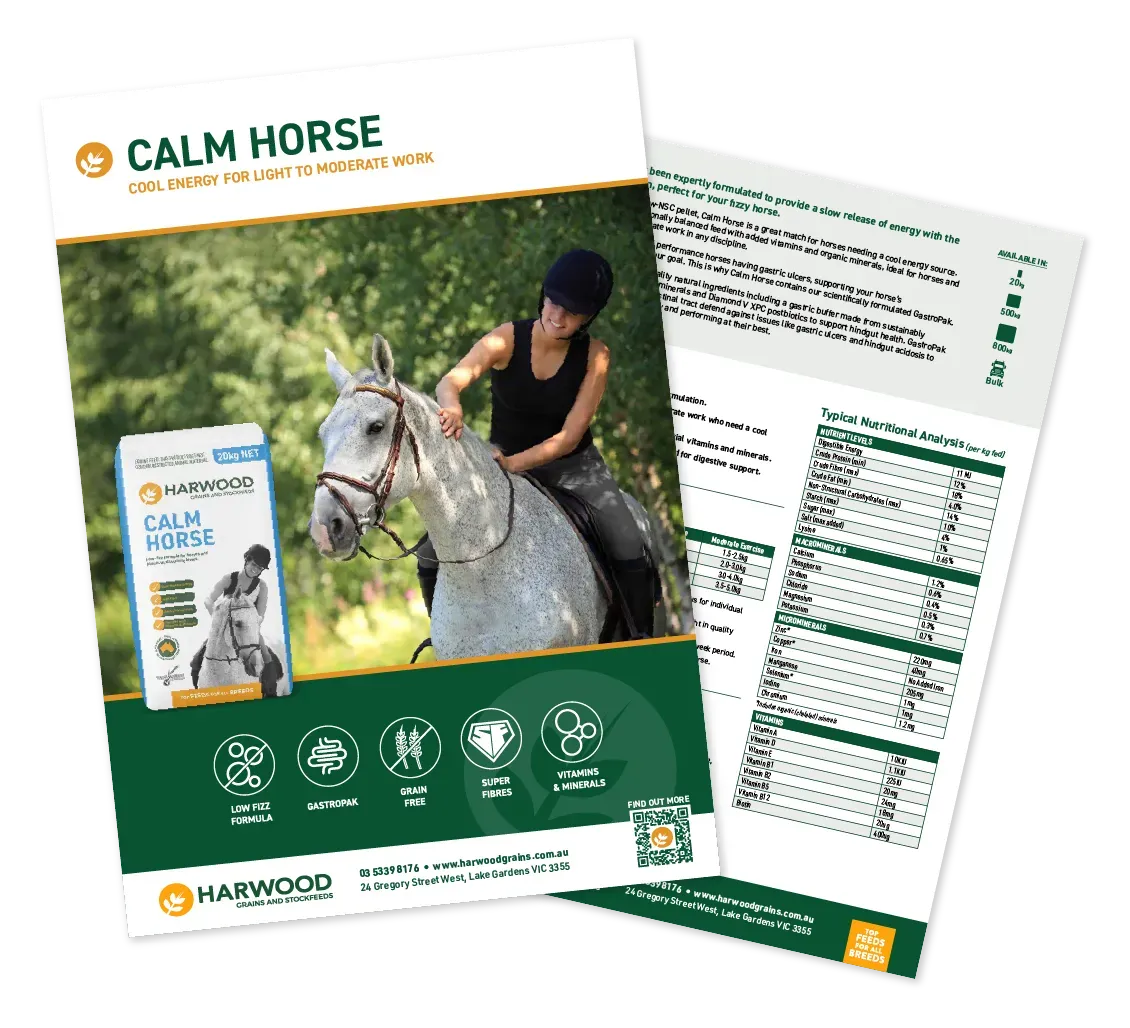
Download full product info here
Including full nutritional information and feeding directions.